
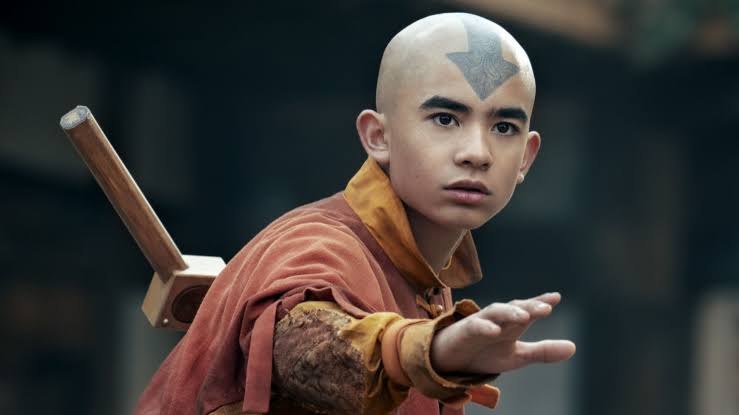
When we last left our heroes in Episode 3, “City of Walls and Secrets”, the story of the live action adaptation had begun to very fully divert from the source material in Ba Sing Se. I’ve been saying throughout this season that drastically altering from the original story isn’t inherently bad, and in fact it’d be interesting to see the same characters we know and love in new scenarios. That is mostly upheld in episode 4, “The Water Falls, The Stones Emerge”; while I appreciate some of the new stuff, I am officially disappointed in a few changes this season for the first time.
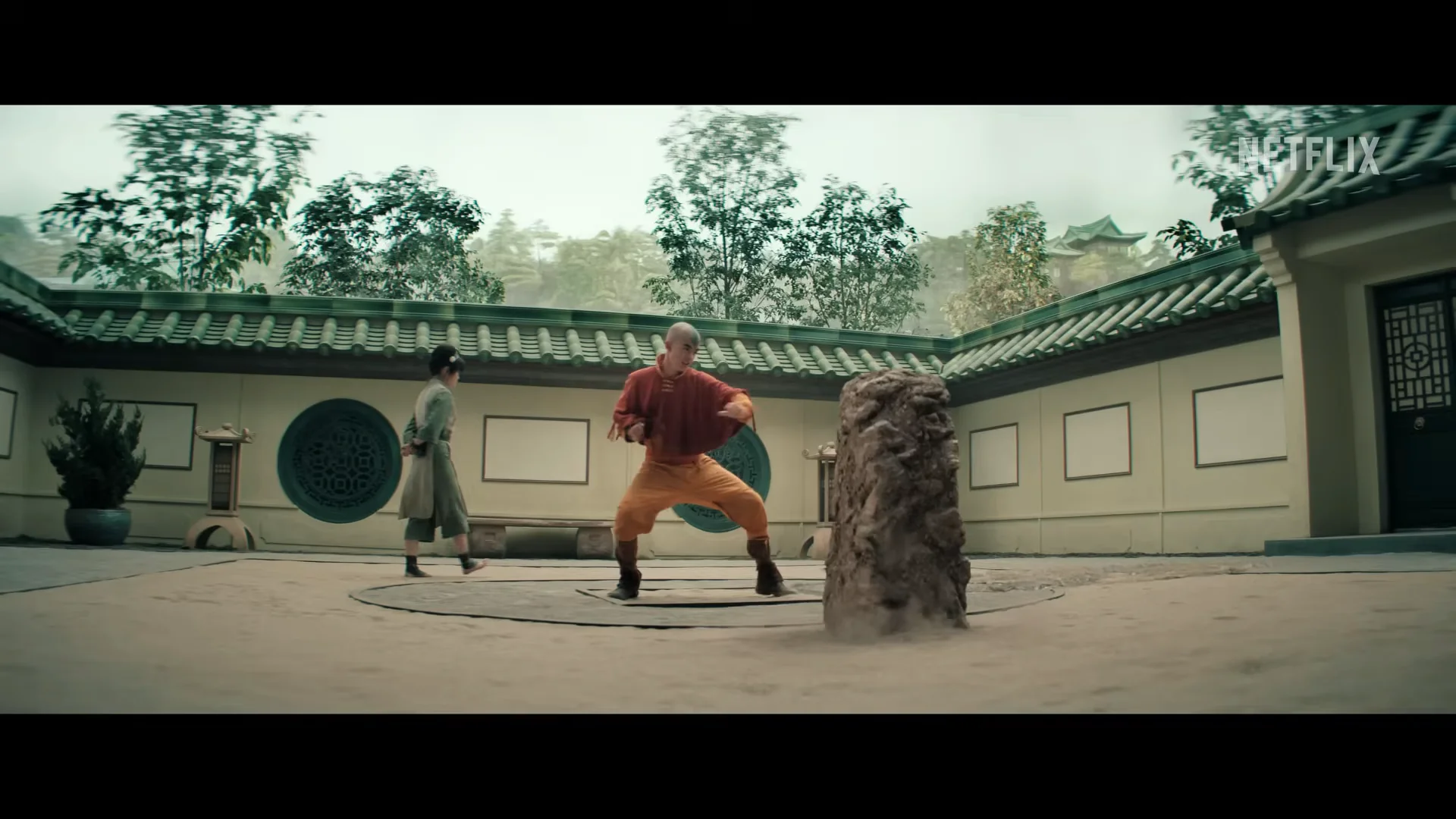
We begin with a montage over many weeks, and this, along with the rest of the episode, encompasses the more memorable parts of The Tales of Ba Sing Se, aka the best filler episode in television history. Iroh begins work in a tea shop; Toph trains Aang in earthbending; Aang and the feigning-friendly Long Feng travel the Upper Ring doing good deeds and public works; Sokka investigates the mysterious disappearance of The Mechanist after he’s taken by the Dai Li; Katara becomes The Painted Lady, doing good deeds by night around the Lower Ring; Zuko takes a day job working in a stable and by night become the Blue Spirit, robbing nobles to support himself and his uncle.
This is kind of a weird mishmash of stuff to happen all at once, but I actually really like it. One of the main strengths of the cartoon was the parallel journeys Aang and Zuko were on, where they often were learning the same lesson through a different lens at the same time far away from one another. Here, Katara takes on her secret identity from Season 3 to heal the sick and bring supplies to the poor from outside the watchful eyes of Joo Dee, while Zuko is at the same time taking on his secret identity to attack the nobility. Both will learn in this episode that, for different reasons, the secret identity is not sustainable, and one cannot hide behind a mask forever. This parallel journey is new but feels like something from the original, and I liked it quite a lot.
Professor Zei, who is entirely rewritten from the original, tells Sokka about the Spirit Library, and Sokka resolves to help him find it so they can find any lost knowledge about how to defeat the Fire Nation. Long Feng continues to play Aang like a fiddle: in front of Joo Dee, he corroborates her story that the Mechanist was promoted to be a royal engineer and lives in the palace now. He then takes Aang aside and tells him that Sai is imprisoned by the Dai Li because he was a Fire Nation spy, obviously not revealing that he is pulling every single string in this conspiracy. Another new character, General Sung, finally informs Aang that Long Feng is the leader of the Dai Li and the actual ruler of the city, and he spirals from the betrayal.
One of the more interesting stories in this episode is with Toph. First, she is receiving daily marriage proposals from suitors in Ba Sing Se who are lusting after her family’s fortune. This is quite a change, as Toph is not playing undercover, and everyone in the city knows who she is. At some point, her parents will absolutely hear about this and know where to get to her. Kind of strange since she has two (inept) bounty hunters chasing her. The really interesting thing is that a story from The Promise, one of the canon comic books published after the show, actually comes into play here. Toph is blackmailed by someone who knows her parents are selling weapons to the Fire Nation, which will come back into play later.
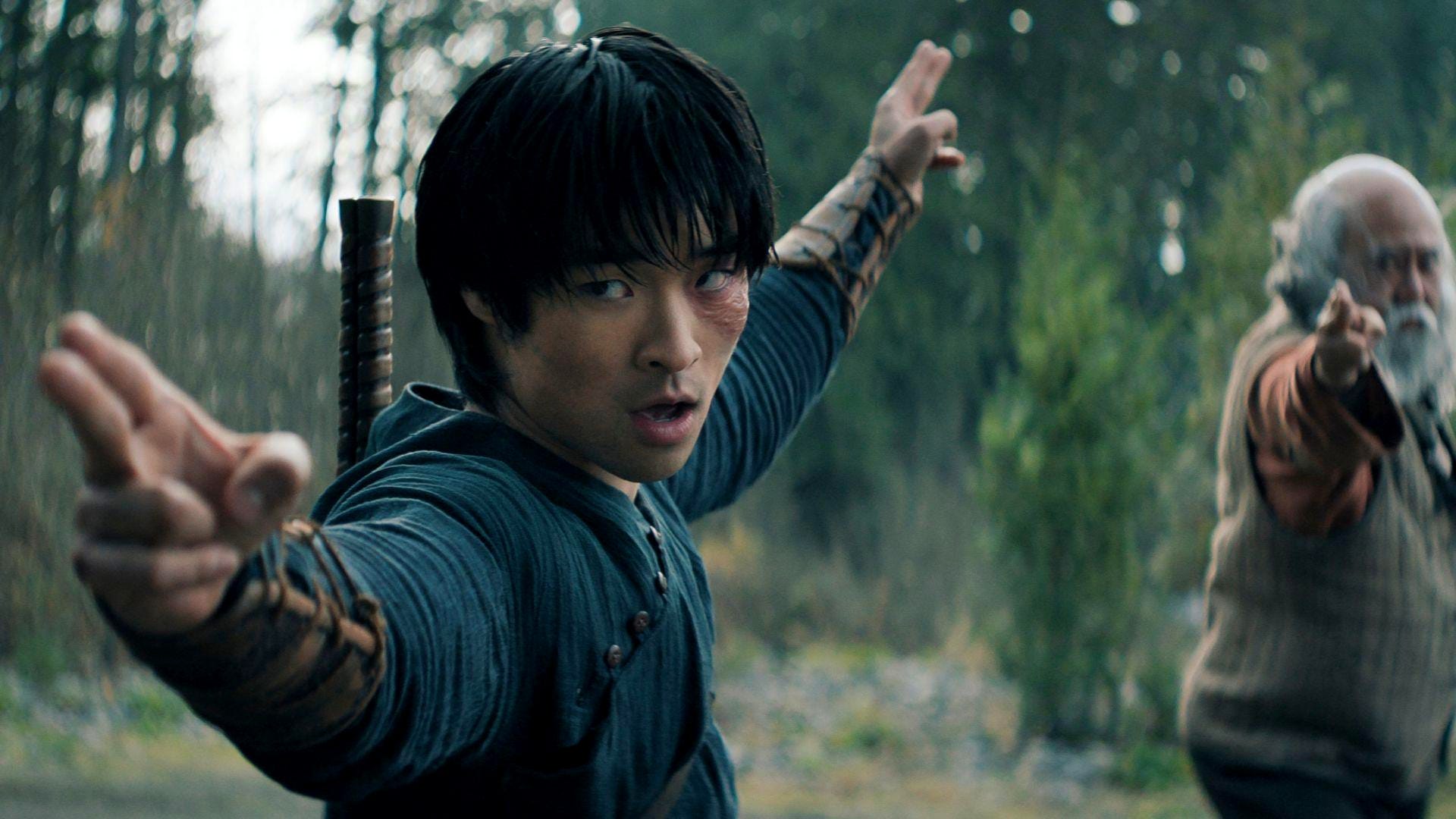
Meanwhile, Jet’s racial profiling of Zuko and Iroh has been sadly removed (I loved this story), and replaced with a new racial profiling arc. In a world very different from the cartoon, a group of Fire Nation defectors are living in a Lower Ring neighborhood of Ba Sing Se, led by the infamous Jong Jong The Deserter – notably absent from Season 1. Jet enlists Zuko to help him and some other thugs shake down and raid the neighborhood to show them Fire Nation isn’t welcome in the Earth Kingdom, and Zuko goes to warn them, having an interesting conversation with Jong Jong. Zuko continues his journey in understanding how the Fire Nation ruined the world at this camp, and later, as the Blue Spirit helps defend it from Jet (helped by Katara as the Painted Lady).
At the same time, Iroh is essentially living through his pivotal character moment from The Tales of Ba Sing Se. In the original episode, Iroh poetically spent the morning helping a baby boy, the afternoon helping a teenage boy, and the evening helping a young man. In short, he spent the anniversary of his son’s death raising a young boy into a man, sharing wisdom and heart. He ends the day by lighting a candle on a hilltop by a tree, looking at a picture of his son, and saying, “If only I could have helped you.” The devastating blow to our emotions ends with his tearfully singing a song, “brave little soldier boy… comes marching home…” and then I weep.
In the Netflix version, he sees a public art display before the Dai Li shut it down, forcing him to remember the hundreds of lives he indirectly ended during his siege of Ba Sing Se years ago. Again, this is an improvement, as the original show barely addressed his war crimes. In his misery, he tries to help reform a mugger and share some wisdom. He spends the whole day with this man, before heading to the same tree to mourn for his son. The instrumental of Little Soldier Boy plays, but Iroh does not sing, making the moment miss a little bit. I think if you were new to this show, it would hit well, but compared to the original, it’s a worse reiteration of one of the show’s best moments. So why change this? Did the showrunners not get why it hit so hard in the first place?
The episode closes with Azula and friends ambushing the Kyoshi Warriors, taking their clothes, and entering Ba Sing Se with a Fire Nation general offered up as a prisoner at Azula’s command. They are welcomed into the city, much like the original, but this time much earlier on. I would say overall this was a good episode, and I enjoyed most of the changes, but the fumbling of Iroh’s Tales of Ba Sing Se story leaves a really sour taste in my mouth.
