
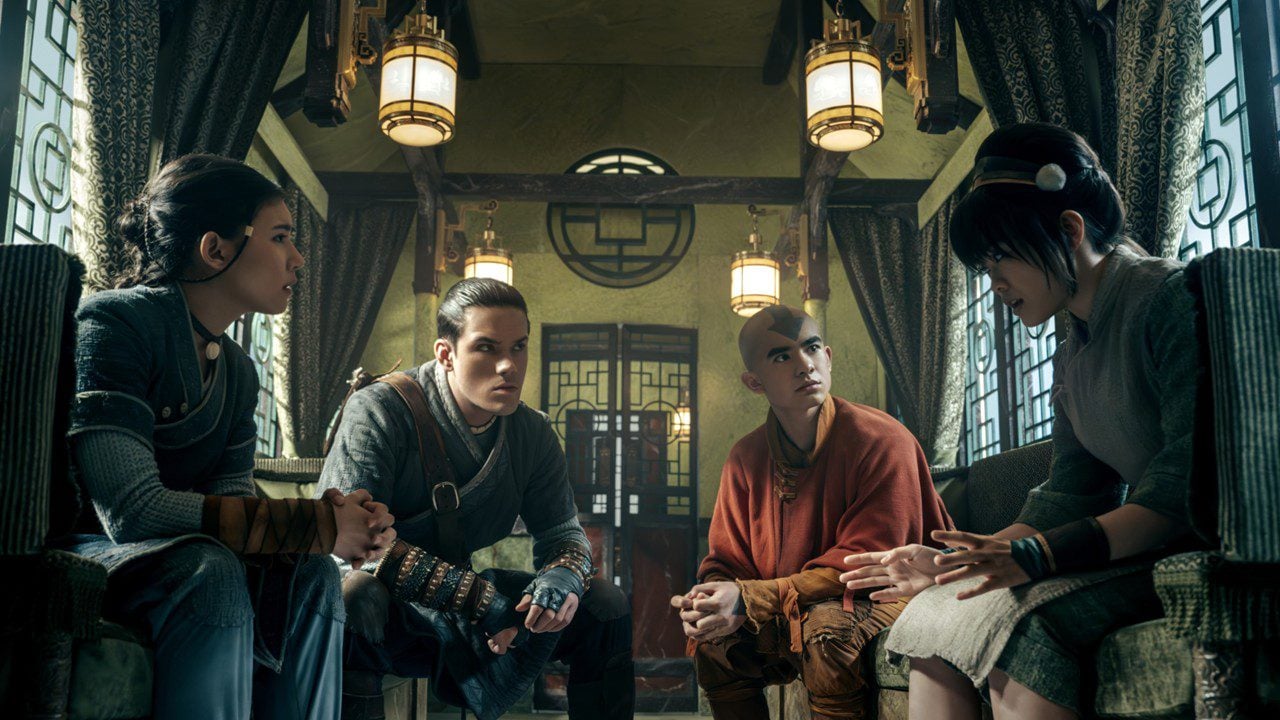
City of Walls and Secrets, the third episode of Season 2 of Netflix’s live-action adaptation of Avatar: The Last Airbender is interestingly the only one of the seven episodes in this season that shares an episode title with its source material. In the original cartoon, this episode brings the Gaang into the Earth Kingdom capital of Ba Sing Se. The Impenetrable City is physically divided into three rings around the Palace, with the Lower Ring being a barely-livable slum. They also encounter Joo Dee, who is part of the North Korea-like information police that make sure no news about the war makes it into the Upper Ring. There is no war within the walls, after all.
This episode is the first of the season where some of the many, many changes to the story come out definitively less interesting. Iroh, despite having been shot in the heart by lightning hours ago, seems to be back on his feet, if not a little worse for wear. He attempts to teach Zuko about redirecting lightning, which Zuko wholly rejects because he wants to shoot lightning. I found this to be a strange and out-of-character alteration, as in the original show Iroh tells Zuko that he’s going to teach him a trick Azula doesn’t even know about and Zuko is extremely eager to learn. It’s important that he’s excited about learning it, because Iroh developed the move by studying waterbenders. If he’s rejecting the lesson outright, as in the Netflix show, he loses that character development moment of learning about how all four elements are really one. We are also deprived of one of my favorite scenes, of Zuko climbing a mountain in a thunderstorm to scream at God to strike him with lightning, sobbing at how the universe will not fulfill his wishes even for pain. Perhaps later in the season.
Azula chases the two of them onto the refugee ferry – following their fight in the last episode and Zuko’s rejection of her pardon offer, she seems to have decided it’d all be much easier to kill her brother and uncle. It’s also strange that Zuko turns down the real pardon offer from Azula in this version, because in the original he wants to believe it so badly he lies to himself about it being a trap. It’s not so much a step back in his character development as just a removal of an important moment – what lesson is he to learn here? He should have trusted Azula? I think back to the cartoon, where in the Book 2 finale Iroh cautions Zuko, “The kind of redemption [Azula] offers is not for you.” I feel that the intent here was for Zuko to realize that the kind of redemption his father is offering with a pardon is not true redemption, but none of that comes through, and a major character moment is missed here. Back in season 1, this kind of thing happened eight times an episode – hopefully season 2 doesn’t fall back into that.
Zuko and Iroh manage to escape Azula and board the ferry, but Iroh is weakening from the lightning blast and the refugees on the boat are expected to survive for days on gruel. As in the original, the two run into Jet and the Freedom Fighters on the boat. I loved this scene in the original and here in the adaptation, as Jet (Sebastian Amoruso) looks, sounds, and acts as if he stepped right out of the cartoon. Seriously, everything down to his voice and inflection is identical. Zuko and Jet team up, “liberate” some of the luxury food the guards have, and distribute it to the other refugees. There’s a slight change here that I find interesting; in the Nick show, Jet was still committed to his Robin Hood “steal from the rich, give to the poor” thing. Here, he has been completely disillusioned, and actively tells Smellerbee not to collect more food for the other refugees. This Jet’s motto is now “steal from the rich, give to me”, which is a pretty big change but also could pay off interestingly when he reunites with the Gaang later this season.
Meanwhile, some of the earthbending training from Bitter Work is taking place, although Toph is teaching Aang as they walk and guide the refugees to Ba Sing Se. This feels a little more “cut for time” than the other changes, as that’s an important episode for Aang to grasp why earthbending is so hard for him and for us to get to know Toph. The pair are practicing earthbending while walking, leaving a trail of boulders and destroyed earth in their wake; this sort of feeds into a plot point from The Chase, where Azula is tracking the Gaang based on Appa’s fur shedding on the ground in a trail behind them. I did not have an issue with this part, although dragging these refugees from point A to point B over and over for the first three episodes of this season is dragging the pace down more than I’d like.
Probably the change I like the most is the addition of the Mechanist (Danny Pudi) to the main story as both part of the refugee group and as a father figure for Sokka. It’s a role that character pretty smoothly slots into with this expanded role, and Pudi seems to have developed a good rapport with Ian Ousley that works well in providing support for Sokka’s burgeoning knack for engineering. The Mechanist also plays another new role: in his time as a spy for the Fire Nation, he learned about the fact that Sozin’s Comet is returning and that the Fire Nation will use it to invade Ba Sing Se. This is not something the characters discover in the Spirit Library as in the original, but it’s pretty plausible that the Mechanist could have overheard this information but not the detail about exactly when the comet is coming. Missing that crucial information, Aang is now aware he has a very limited timeline, but no idea how long that timeline is. There’s also a new refugee character, Amita, who kind of serves as a mother figure for Katara and a love interest for the Mechanist. These additions are very welcome, as Katara doesn’t have a lot of female role models to play off of until they meet Hama in Book 3.
Probably my favorite scene from this episode is when Aang and Toph are on their own on the road and run into The Boulder and Xin Fu, who have been pursuing them. Aang is still unable to earthbend, and while the bounty hunters are supposed to be capturing them, the two of them, along with Toph, all end up shouting conflicting but encouraging earthbending tips. This scene made me laugh genuinely, and I am very much sold on Misipeka as The Boulder. His rapport with Xin Fu is fun as well, so I hope we see a lot more of them over the next season. I have a sneaky feeling Xin Fu will end up joining the group alongside The Boulder for the Day of Black Sun invasion in Season 3.
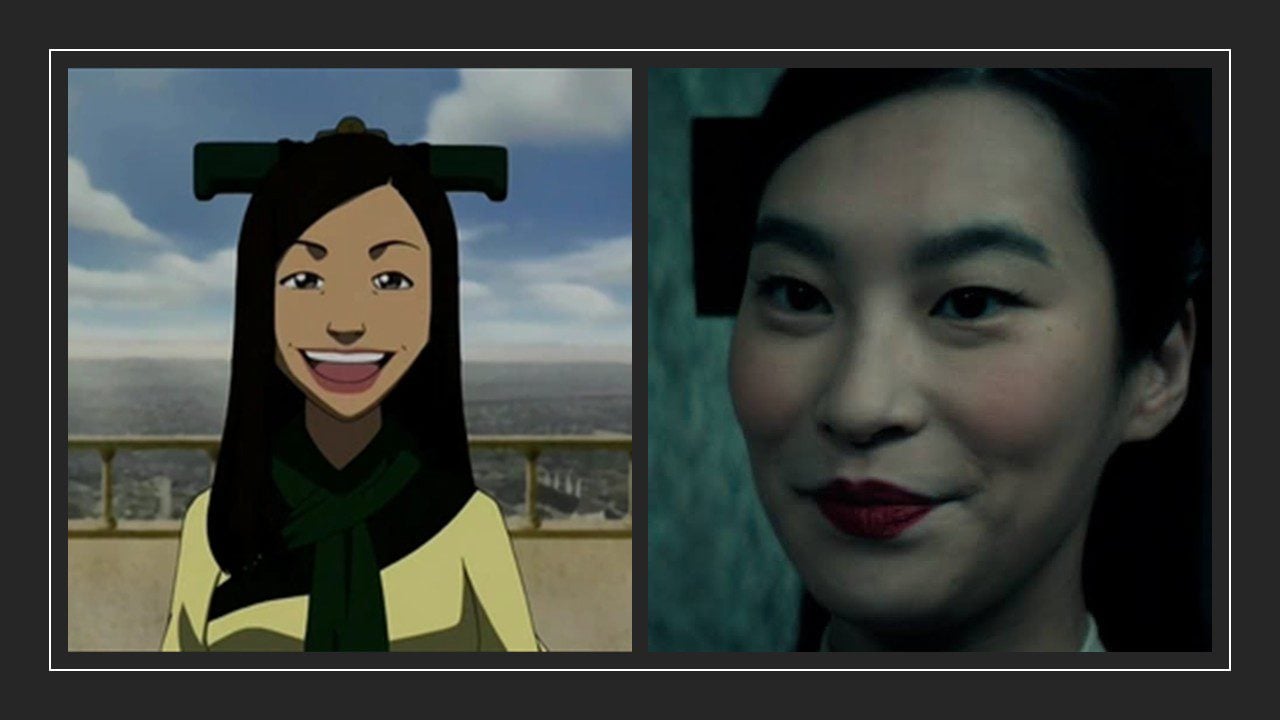
It’s when we arrive at Ba Sing Se that the story diverges so far from the original I can now only see glimpses of the Nickelodeon story. For reasons I don’t quite get, the group is ambushed by the Dai Li outside the walls and trapped in stone prisons, only for Toph to have to use her family’s weight as nobility to get the Gaang released. We meet another favorite character here, Joo Dee (Amanda Zhou), who is assigned to “handle” the group while in Ba Sing Se, never letting them out of her sight and ensuring they do not talk about the war. Zhou is not delivering her lines quite as robotically as Lauren Tom did originally; remember, she is a brainwashed agent of a totalitarian, information-suppressing regime. Tom’s performance communicated a character who is a robot almost all the time and is working mostly against her will, while Zhou is playing it up like she is willingly part of the whole conspiracy. It’s a lot less interesting.
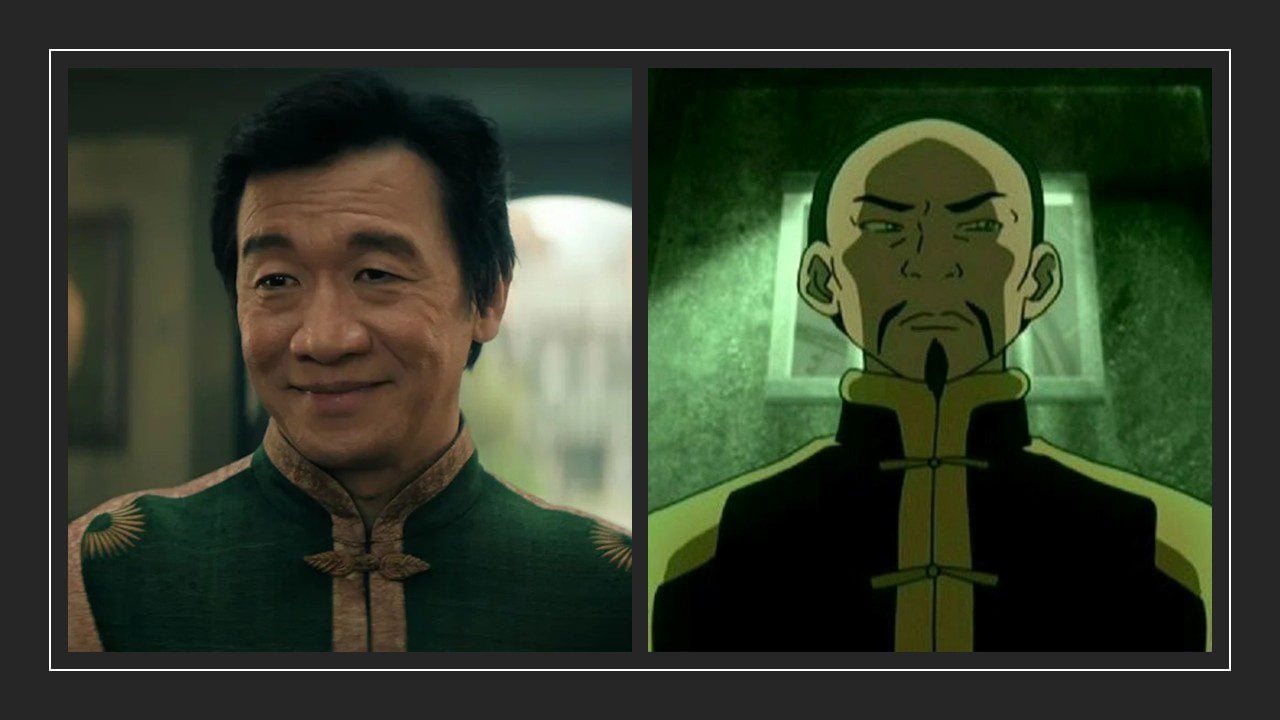
Speaking of which, we also meet our grand villain for Season 2, Long Feng. The “Cultural Minister” of Ba Sing Se was played by the legendary Tom Clancy (who you’ll know best as Mr. Krabs) in the cartoon, with a powerful and commanding performance that would send shivers down your spine. Long Feng has been rewritten from top to bottom, much like Admiral Zhao was in Season 1, as a completely new character with a completely new storyline. Veteran actor Chin Han plays him as pretending to be a friend to the Gaang, teaching them about how things work in Ba Sing Se and keeping Aang distracted from his goal to see the Earth King by way of weaponizing bureaucracy. This is a great departure from the cartoon, where Long Feng is a scene-chewing, mustache-twirling villain almost from the start. I don’t know that I like this change at all, frankly; I understand the idea of giving more nuance to the disinformation themes by showing the group confronting propaganda, but it also ended up being a lot less interesting.
One change I very much dislike is that the people of Ba Sing Se all know about the war – they’re just choosing not to talk about it so they can live in bliss and ignorance. In the cartoon, the Secret Police, the Dai Li, make sure the refugees in the Lower Ring never come to the Upper Ring, so they control the flow of information and make sure the upper class doesn’t even know about the war. Visitors from the outside to the Upper Ring are watched at all times to make sure they don’t spill the beans to the aristocrats. The original show took very clear inspiration from Korea, modeling everything from the architecture to fashion of the city on Korean Joseon styles and the propaganda/government machine on modern North Korea. Now that the point they’re making is “everyone knows about the genocide but doesn’t care,” the story has shifted from fighting the machine itself to fighting the indifference of citizens. I think it makes for a far less compelling story.
I’m unsure how the rest of the season will play out with these massive changes, which is somewhat exciting, but I am a tad less excited about the season after watching this episode than I was after watching the first two.
