
As a mega fan of Nickelodeon’s Avatar: the Last Airbender, it is probably of no surprise that I was disappointed with the first season of Netflix’s live-action adaptation of the beloved children’s show. I was there on day one as an 11-year-old, and since the show finished in 2008 my love for the universe has only grown. Rewatching the original show as an adult, all 30+ times, has been an eye-opening experience for me. Every time, whether through my own rewatches or with reactors, I find something new to love in what I consider to be the apex of storytelling.
As a child, ATLA taught me about racism and tolerance, betrayal and redemption, and peace and war. As an adult, it has taught me about fighting fascism, finding one’s self, and a belief in second chances. The first season of the Netflix adaptation communicated very little to none of these things. Two and a half years ago, I boldly declared that while Season 1 had been a complete miss, Season 2 could be good if showrunner Albert Kim was kicked off the show. Well, Season 2 is here, Albert Kim has been kicked off the show, and shockingly … it is good.
Christine Boylan and Jabbar Raisani, the new co-showrunners, have elected to continue the first season’s shortening and removal of content from the original show; however, this time, there feels to be a purpose to it. Storylines aren’t being cut for time, but are being reformatted to better service a live-action story with the pacing required of 60+ minute episodes vs the original’s 22-minute runtimes. Boylan herself penned this first episode, “Somewhere Safe”, following a few months after the attack on the Northern Water Tribe.
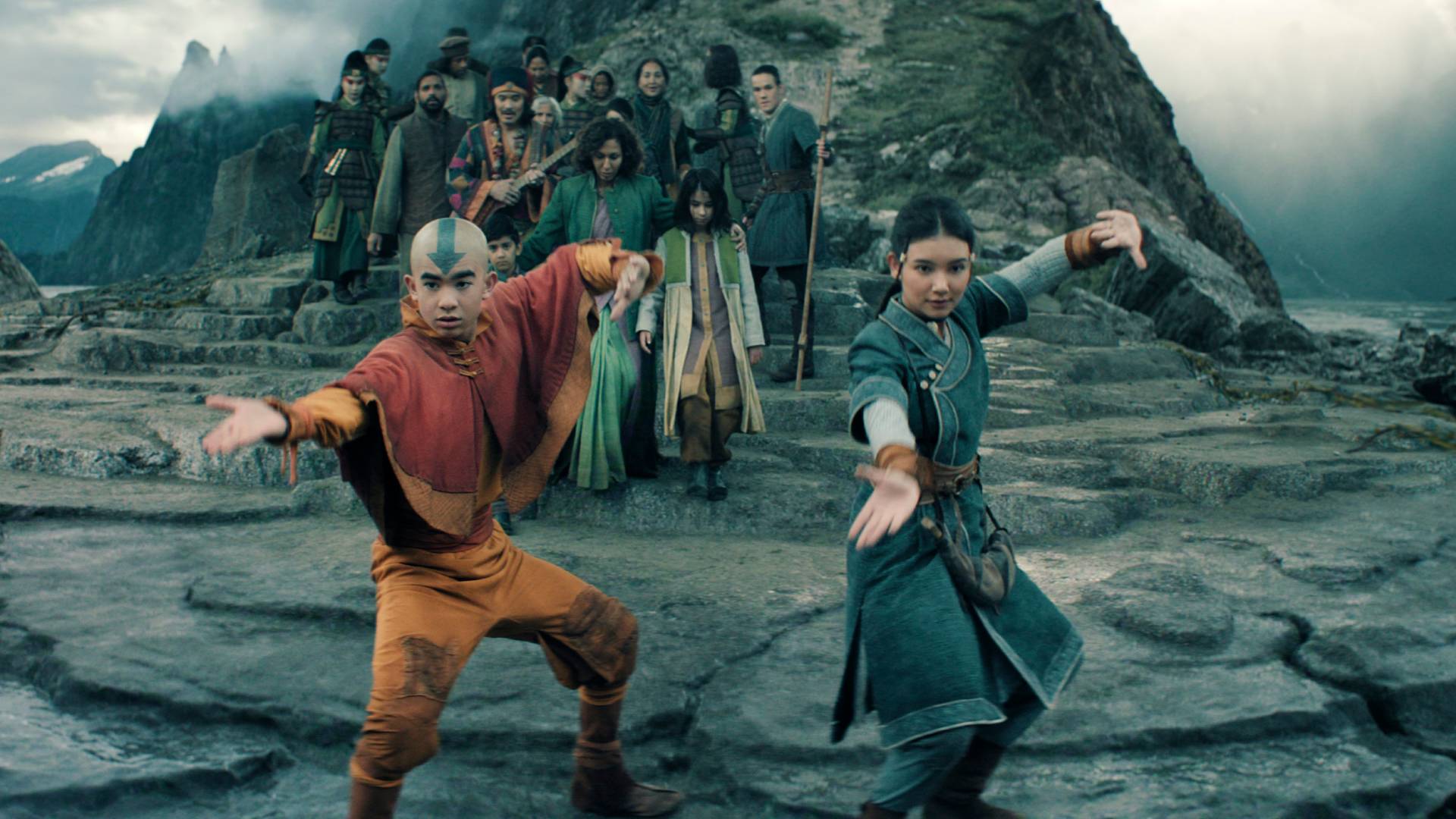
We join a group of refugees from Omashu including the Mechanist and his son as well as the “Secret Tunnel” hippies. As the Fire Nation soldiers discover them, Aang, Sokka, and Katara appear to assist. We should talk about the elephant in the room – all the kids, but most noticeably Gordon Cormier (Aang), have grown up a LOT. Cormier’s voice has dropped and he has grown well over a foot in the two years between the seasons being filmed. Netflix attempts to lampshade this by having the characters acknowledge in the show that he’s sprung up like a tree so quickly, but you’ll just have to suspend your disbelief for this one. Thankfully seasons 2 and 3 were filmed back to back, so Aang won’t be buying lottery tickets by the time he faces the Fire Lord.
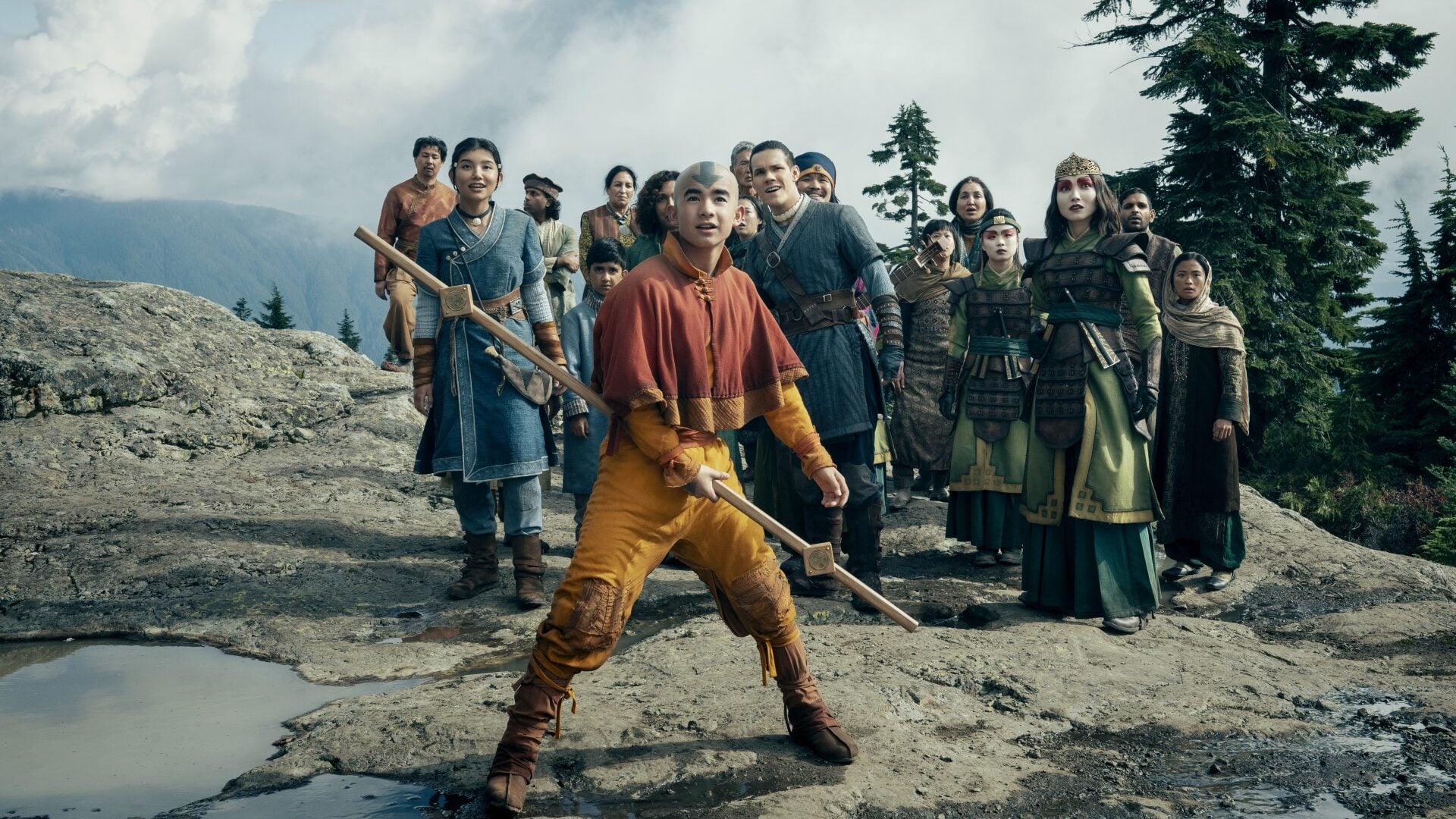
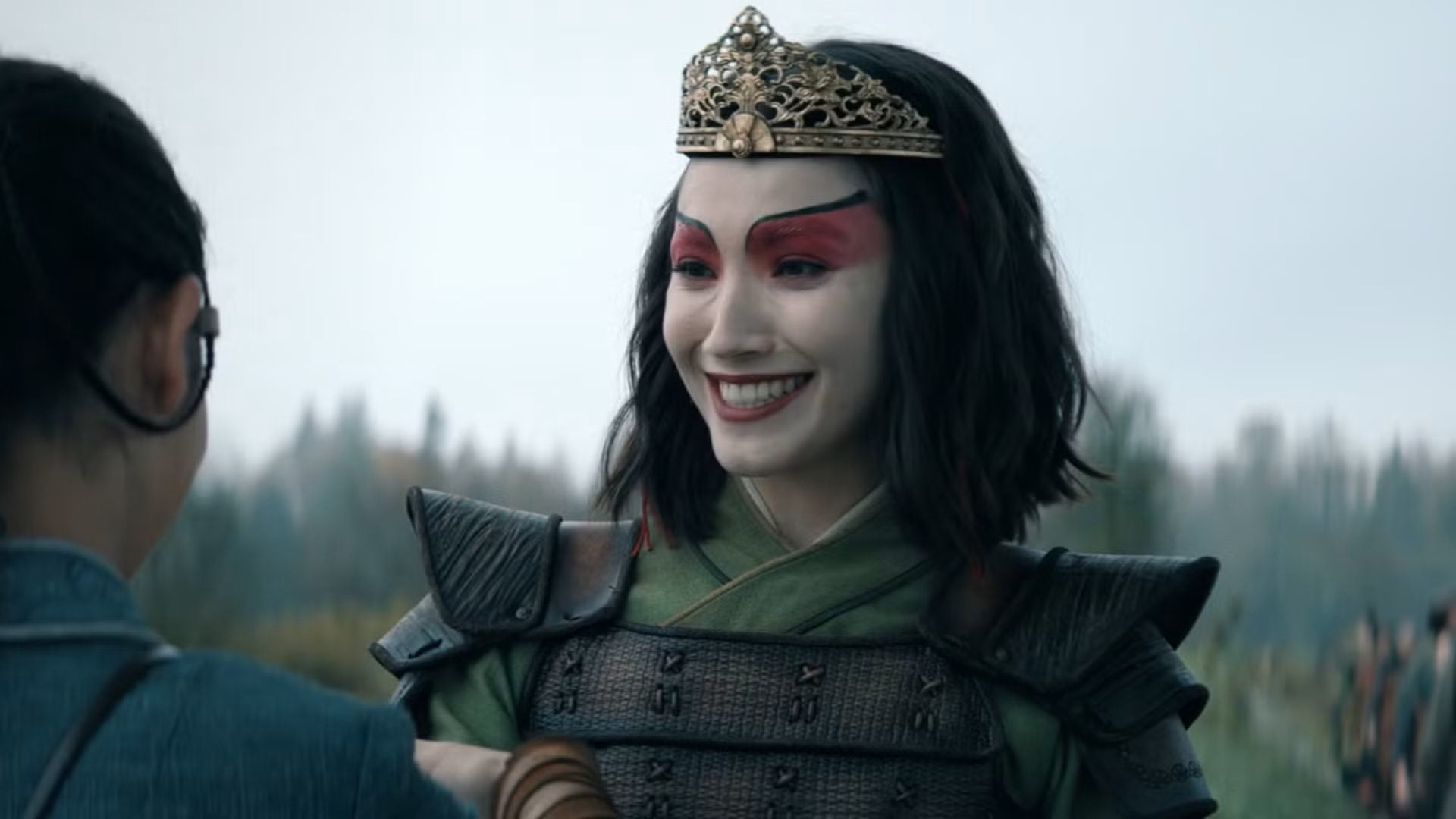
During the battle (which admittedly was not well choreographed), the Gaang meets up with Suki and the Kyoshi Warriors. In the original, this does not happen until much later, and I find this change to be a great improvement – one of my small grievances with the original is that we don’t get enough time with Suki and Sokka together. While I did not like Suki’s characterization as a love-struck little girl in Season 1, she has been retooled to be closer to her original cartoon counterpart: Suki is confident, forward, brave, but a little oblivious to the horrors of true war. While unaccustomed to the warzone she and the Kyoshi Warriors have waded into, she takes it in stride, and that same confidence is shown in how forward she is about her interest in Sokka, both sexual and romantic. She’s a warrior, and she’s a girl too. So that’s one character assassination undone! Just a few more to go.
Meanwhile, Zuko (Dallas Liu) and Iroh (Paul Sun-Hyung Lee) are on the run from the Fire Nation following their betrayal of the cartoonishly evil Admiral Zhao in Season 1’s finale. Here, we see the first major story change from the original: in this adaptation, The Fire Lord orders Azula to bring Zuko and Iroh back to the Fire Nation for a pardon, as he is impressed Zuko survived the war and feels he has served out punishment over his three years of banishment. Azula is infuriated at the idea of pardoning them but sets out with Mai and Ty Lee to obey her father, plotting all the while on how to make this end badly for Zuko. In the cartoon, The Fire Lord tells Azula to bring them back to the Fire Nation to be prisoners for their transgressions, and she tries to trick them into returning with her with the false promise of a pardon. It’s a huge change that humanizes Ozai a bit while showing how petty and vindictive Azula is, which I don’t mind. I just hope this doesn’t lead to too much humanizing of the fascist genocide king later in the season.
Liu’s Zuko was absolutely the highlight of the first season, and continues to be here. Liu and Lee have finally developed the charisma and rapport that was missing from the first season, and paired with much better directing of the pair I am finally seeing Lee as Iroh without having to think about it. The two of them are working in a melon yam field on a plantation in the Earth Kingdom, undercover, and Zuko’s resentment of having to do work that he sees as below his station is made very clear. His disdain for the life he has been handed has grown over the past few months, and is unfairly being channeled to Iroh as it was in the original. But here, in what is easily the best scene in this episode, Zuko verbally lashes out at Iroh, reminding him that he is not his son and that his failure at Ba Sing Se is why Zuko has lost everything. The Netflix show also says the quiet part out loud that the cartoon didn’t directly adress: Iroh is a war criminal. His actions as a general at Ba Sing Se led to thousands of deaths in the name of conquest. Zuko reminds Iroh that not only is he not forgiven for his failure to capture the city and letting his son die, but that he is a monster for even trying. The two actors shine brightly in this episode, and at this point I finally relaxed – Netflix’s ATLA is, officially, a good show.
This episode interestingly melds elements from not only the Book 2 episodes The Avatar State, The Cave of Two Lovers, Return to Omashu, Avatar Day, The Chase, and The Serpent’s Pass, but also pulls in from one of my favorite Book 3 episodes The Painted Lady. We can start to see through this storyline that Katara’s character assassination has been recognized from the first season and is being addressed. She is now far less preachy and lame, and you can start to see that her inner kindness is always at war with her uncontrolled hatred of the Fire Nation. The reason that she is so strong is because, like the Hulk famously once said, she’s always angry. Katara is a juxtaposition in a single person, a girl who uses her anger to find hope, and of course as the season continues to its explosive ending in the crystal caverns we will see those warring parts of her come to a head. I’m now very hopeful they will after Season 1 absolutely butchered this character.
We see a little more of Azula finally, and now that actress Elizabeth Yu has been given better direction and more time on screen I am finally seeing the Princess we hate to love shining through. Yu is accompanied by her infamous partners-in-crime Mai and Ty Lee, played by Momona Tamada and Thalia Tran, and immediately establishes herself as a psychopath by ordering her two best “friends” to kill each other just because she desires it. Yu is doing a solid job, but it just isn’t fair to pit the performance of this young woman against Grey DeLisle’s generational performance in the cartoon. Daniel Dae Kim returns as the Fire Lord with deft excellence, as if this performance requires no effort from him; as with season 1, there is no arguing that he is simply the only man in the world who could have pulled off this role.
Netflix’s Avatar returns feeling like a completely different show, not just written by new people, but with a new philosophy behind it. It now has both a unique style and genuine substance, and whatever is lost from the original in translation is made up for in other ways. Sure, this is nowhere near the quality of the original animated show. It never could be. I do see the show finally heading to a good place though, which is in aping Netlix’s masterful One Piece adaptation: understanding these characters, capturing the idea of them, and putting them into a new epic adventure altogether. There is a long road ahead for Boylan and Raisani to correct all of season 1’s wrongs as organically as they have been in this first episode, but I now firmly have hope this final product with have true artistic merit as its own standalone series.
If you’re a fan of the original show and either didn’t watch or didn’t finish season 1, I heartily recommend you skip it altogether and begin watching the Netflix show here.
